Program · April 30 to July 14, 2026 · Closed
Corner
Payments and inventory for Toronto corner stores. One founder built it with two AI assistants, took a live charge, then closed it on the numbers.
How a sale moves
A sale can start at the counter, on a shopper's phone or at an unattended kiosk. Every path writes to the same ledger, which drives restocking and the daily close.
The kiosk
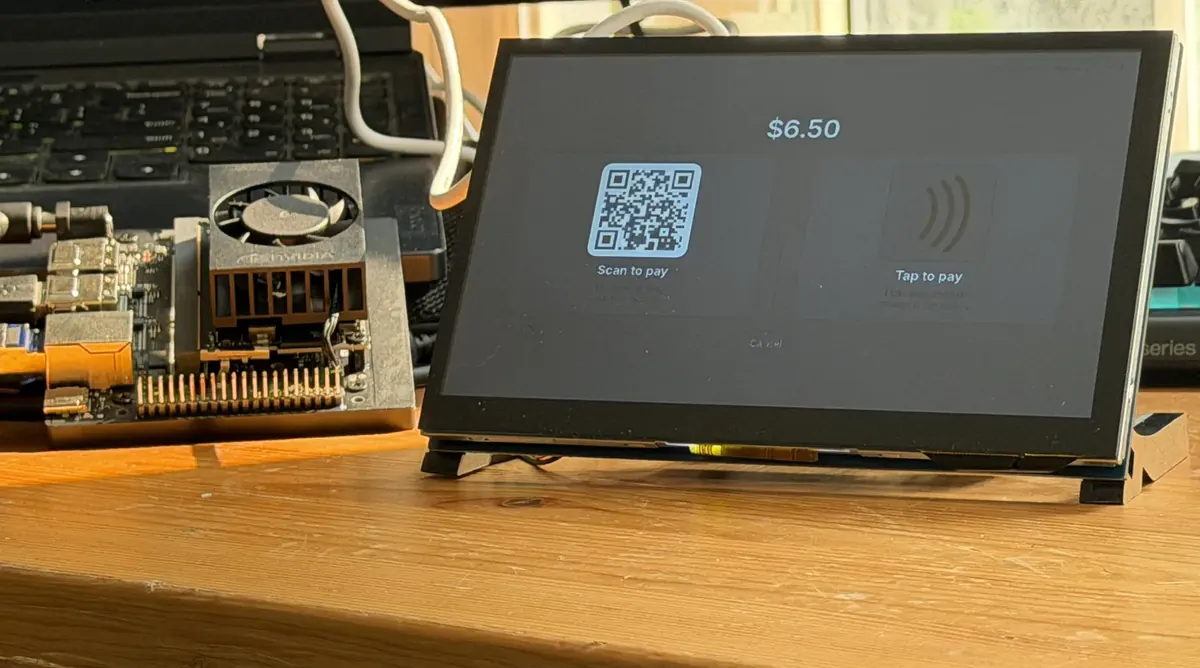
The unattended kiosk ran on a Raspberry Pi behind a touchscreen and drove a real lock. The $250 edge computer beside it ran language and speech models on the device.
Nineteen attacks, all held
Before any real customer, the money loop was attacked 19 ways across 71 checks, and all 19 held. The one real bug it found was fixed and the run repeated clean.
The live charge
On July 9 the bench kiosk charged a real $1.99 on production, and the charge showed up in the card's banking app. It was refunded, for a lifetime net of $0.

Build numbers
The build ran 76 days, from the first commit on April 30 to the close on July 14.
Where the money goes on a $10 sale
About 70% of card sales at a Toronto corner store are debit taps, as modeled. On a $10 tap Corner earned a 10¢ fee and paid Stripe 15¢, so each one lost 5¢.
The stores it was for
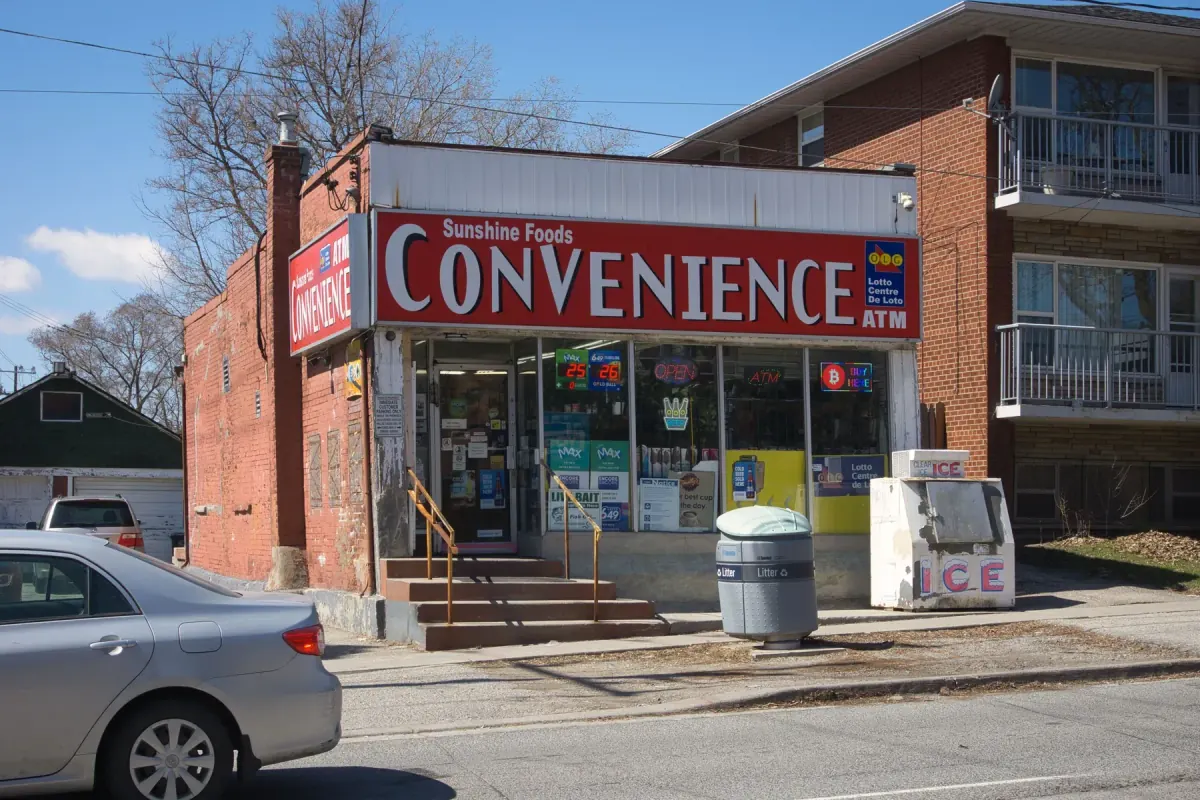
Toronto proper has about 1,375 corner stores. Moneris, Square and NRS already sell payment systems to them.
How many stores it takes
Charging stores Stripe's rates plus 1%, Corner breaks even at 125 to 150 stores, and that price loses to Moneris and Helcim. At a price that wins, break-even moves past 600 stores or never comes.